May-June 2026 Newsletter: AI’s Unstable Ascent: Explosive Demand, Contested Supply, and a Model That Spooked Washington

Source: ChatGPT
Token demand continues to surge, while model providers raise prices and scramble to secure capacity
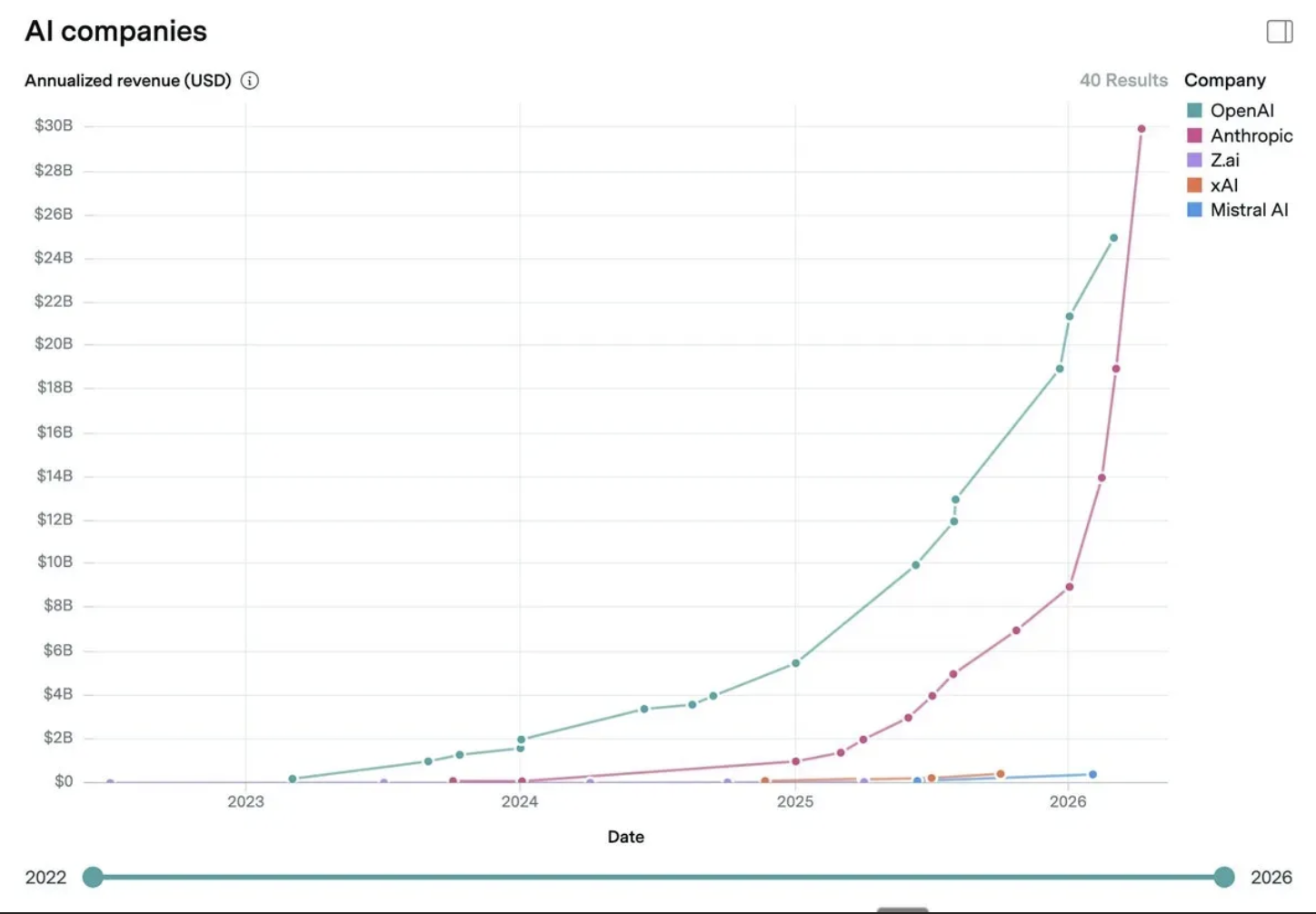
Anthropic projects Q2 2026 revenue of $10.9B, more than doubling Q1’s $4.8B, and expects its first-ever operating profit of $559M. Over 500 companies now spend more than $1M annually on its Claude platform, and eight of the Fortune 10 are customers. link
Those revenues rest partly on subsidized pricing. Token costs have been running at an estimated 15–30x subsidy for Anthropic’s subscription plans, per Zed Industries. Changes announced May 14 that would have moved Agent SDK usage to separate metered credits were paused June 15, likely due to enterprise pushback. link
Source: The AI Corner
B2B and AI service providers are iterating rapidly on pricing too. According to SaaStr, the top 500 providers made 3.6 pricing changes per company in 2025. Salesforce now runs three Agentforce models simultaneously: per-user licenses (from $125/user/month), per-conversation ($2), and per-action Flex Credits ($0.10). link
Per TechCrunch, Anthropic will pay xAI $1.25B/month through May 2029 to rent all of Colossus 1’s output, while Google will pay SpaceX $920M/month for ~110,000 NVIDIA GPUs through June 2029. Both deals carry cancellation clauses, signaling hedged bets on surging demand. link link
Resistance to data center construction puts future inference supply in doubt
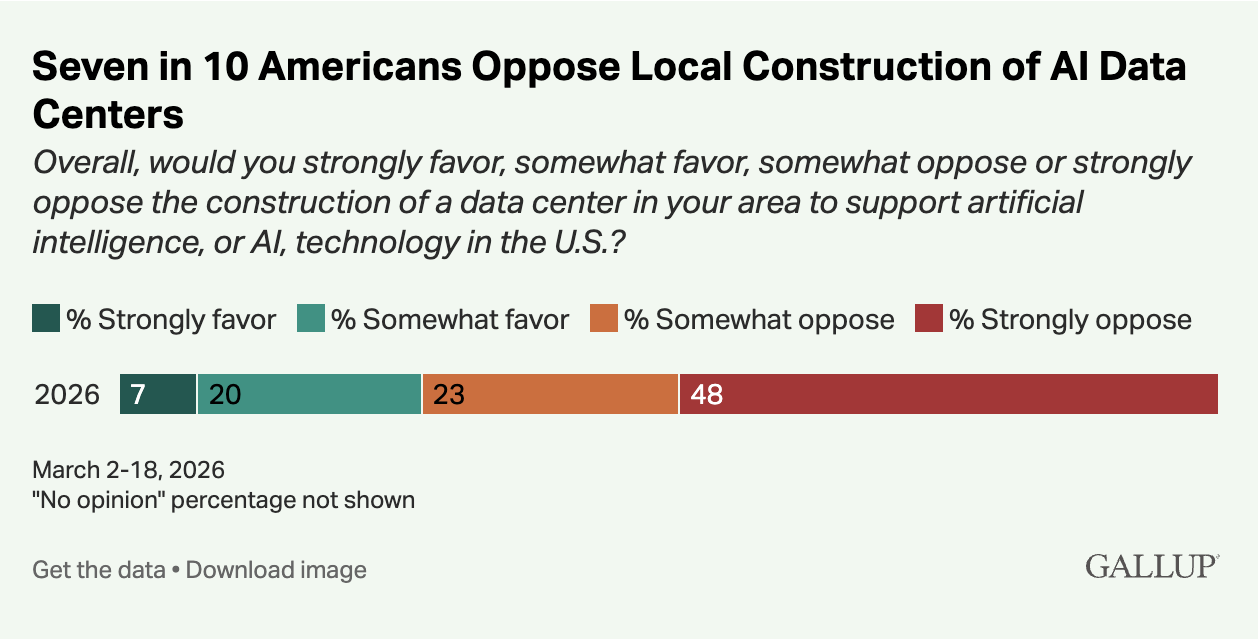
According to Gallup, seven in 10 Americans oppose building AI data centers locally, and just a quarter favor them. Half of opponents cite excessive resource use—18% each for water and energy—while one in five worry about quality of life, including traffic, population growth and higher utility bills. link
Source: Gallup
The WSJ reports that America’s data-center build-out is falling behind, even as Google’s parent Alphabet raises a fresh $85 billion. A JPMorgan analysis found more than 60% of capacity planned for 2027 isn’t yet under construction, with another 7% delayed—blamed on supply chains, permitting and power shortages. link
From tokenmaxxing to token management
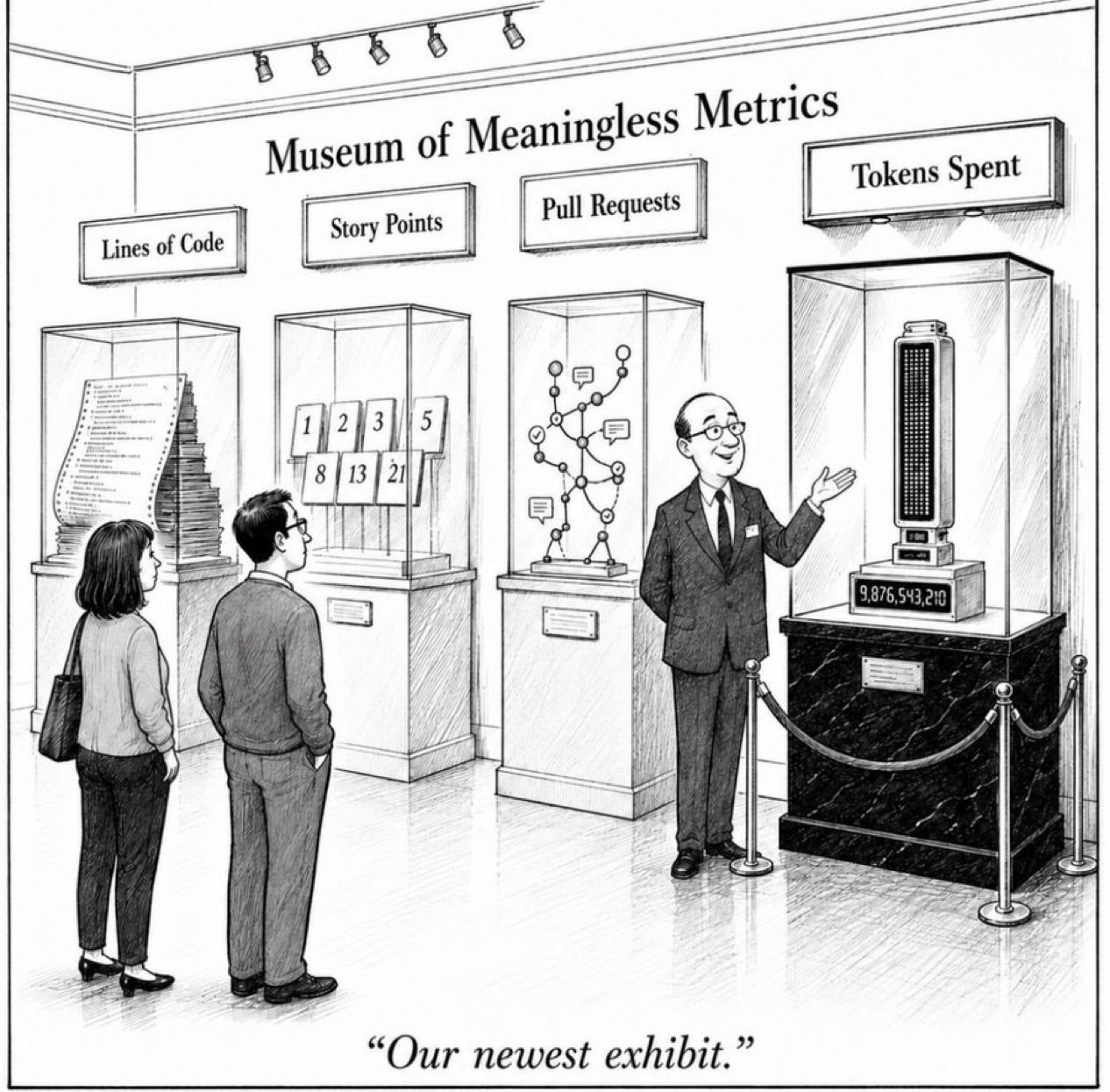
Measurement is shifting from “tokenmaxxing” to managing costs and quality. According to the FT, Amazon scrapped its Kirorank leaderboard after staff inflated token use to climb rankings. SVP Dave Treadwell told employees “don’t use AI just for the sake of using AI,” favoring a “normalised deployments” metric tracking useful code. link
Source: Source
Companies are getting creative about token costs. Per The Information, Zscaler limits model access by role—sales teams don’t need frontier models. AT&T, processing 8 billion tokens a day, cut costs 90% by routing tasks to domain-specific models. UiPath’s prompt engineering, trimming model “thinking” time, yielded 90%-plus savings on some tasks. The Information Bain
Only results will keep the flywheel spinning and the evidence continues to be mixed
A new NBER paper surveying nearly 6,000 executives across the US, UK, Germany and Australia finds 69% of firms use AI, yet more than 90% report no employment impact or productivity gain over three years. Still, executives expect AI to lift productivity 1.4% by 2028. link
The frontier labs, realizing results drive continued demand, are investing heavily in consulting to help enterprises deploy AI. OpenAI is acquiring Tomoro and created the Deployment Company, backed at $4 billion alongside 19 investment, consulting, and integration firms. Anthropic announced a joint venture valued above $1.5 billion. Meta launched an Enterprise Solutions unit. OpenAI Forbes
Bain says leading AI implementers achieve 10–25% EBITDA gains through top-down business reinvention and bottom-up expertise—including evals that assess AI output. KPIs can’t be vague “productivity” or “efficiency,” but rather key business outcomes like response time, first-time resolution, and customer satisfaction. The biggest benefits come from workflow re-engineering, not the technology. link
Satya Nadella puts it plainly: “a frontier without an ecosystem is not stable.” Microsoft’s CEO contends every company’s most important IP is its private evals—differentiation comes from proprietary data, not frontier models or the harness. He warns that tech companies “have to deliver tangible benefits.” It’s a convenient argument from a platform vendor, but it’s also likely the right one. Podcast Substack
Anthropic’s Mythos and OpenAI’s Daybreak find bugs while provoking confusion from the US Government
Proving tangible benefits is complicated when your most capable models trigger national security reviews. Mythos (Anthropic) and Daybreak (OpenAI) were deemed so powerful their release was restricted to organizations maintaining critical infrastructure, to fix bugs before hackers exploited them. Via Project Glasswing, Anthropic reported over 10,000 high- or critical-severity vulnerabilities in one month, including 271 fixed in Firefox. Economist NYT Anthropic
Relations between the US government and Anthropic grew tense and confusing. The Pentagon deemed Anthropic a “supply chain risk” in March 2026. Despite a hands-off AI stance, Trump issued a voluntary-oversight executive order. The Commerce Department then ordered Anthropic to suspend Mythos 5 and Fable 5 access for all foreign nationals, including its own employees and Five Eyes allies—alarming partners. Economist NYT Anthropic