Hello CEO: Three Prerequisites Before You Greenlight an AI Use Case
Most AI projects don’t stall because of the technology. They stall because the business never defined what success looks like.
Source: Source
I keep seeing the same failure mode: the AI “outputs the wrong results,” but it’s actually doing exactly what it was told. The SOP was missing. The data was assumed. The steps were fuzzy.
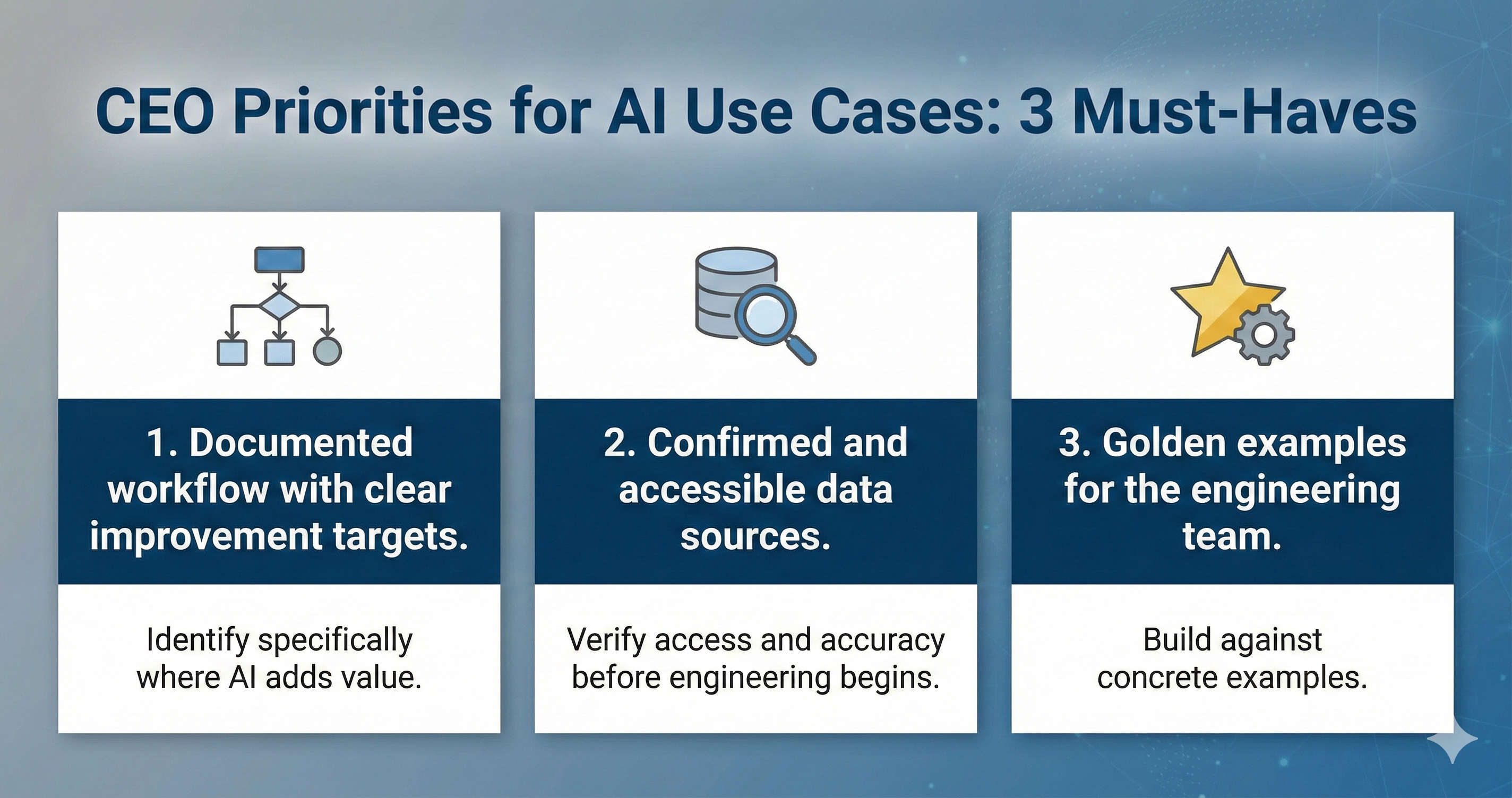
With CEOs more engaged in use case priorities, they need to insist on these three things:
-
Documented workflow with clear improvement targets. Map the current process end to end: steps, owners, decision points. Identify specifically where AI adds value. If you can’t write the SOP, the AI can’t execute it.
-
Confirmed and accessible data sources. Identify the exact systems, fields, and formats required. Verify access and accuracy before engineering begins. Assumed data availability is the fastest path to a stalled project.
-
Golden examples for the engineering team. Provide real, validated outputs that represent “good.” Development speed increases dramatically when engineers build against concrete examples versus iterating through ambiguous feedback loops.
The rub: these three items require real investment from the business, not just from the technical team. Process definition, data validation, and example curation are business responsibilities.
AI rewards preparation. It punishes ambiguity.
Do the groundwork first. The technology will follow.