February 2026 Newsletter: Getting AI over the line in 2026
You can’t pilot your way to profitability
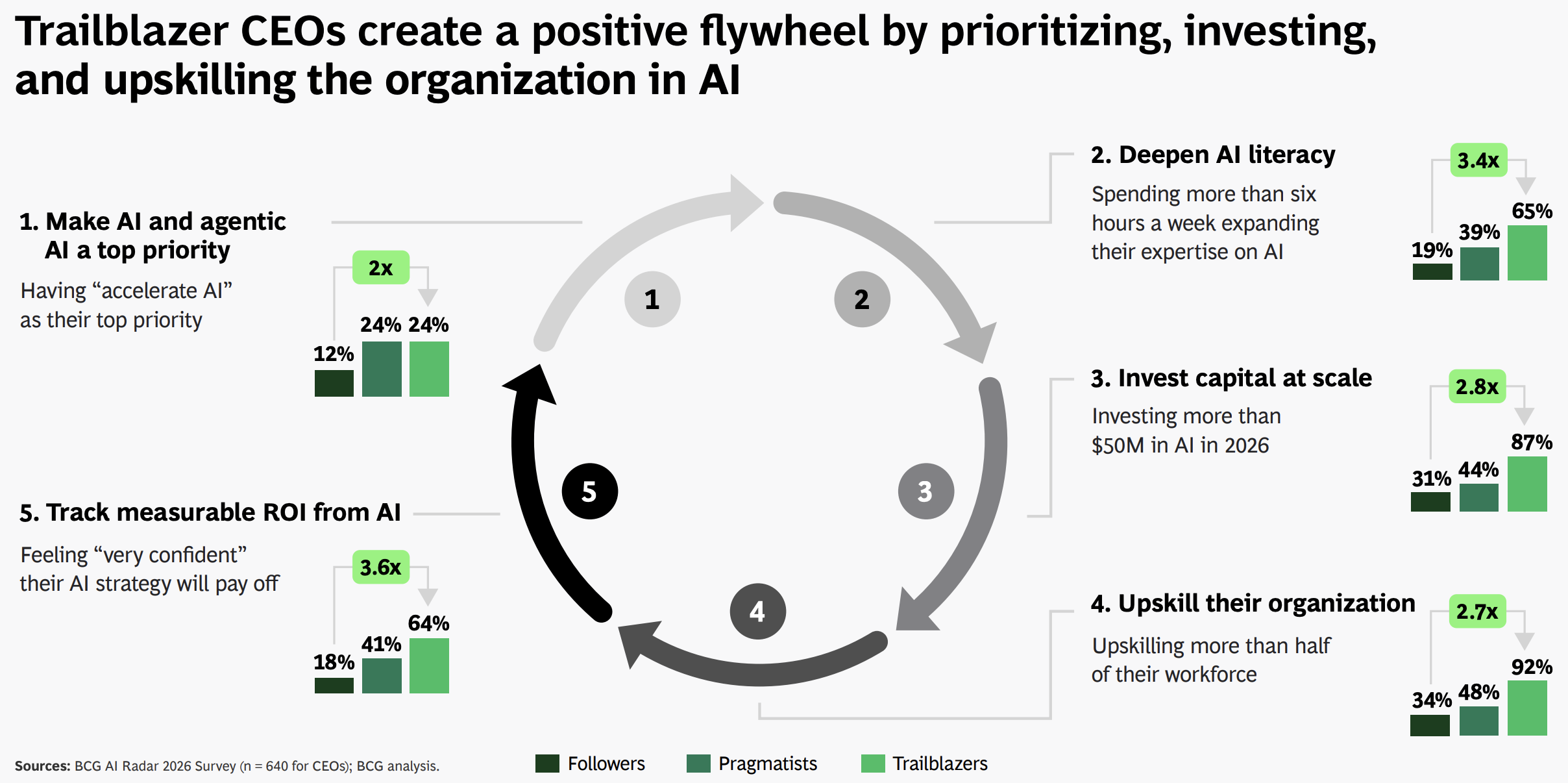
According to BCG, the top 15% of CEOs are “Trailblazers” transforming AI from a CIO experiment to a business-led operating model. They invest ~1.7% of revenue—allocating 60% specifically to agentic AI—and upskill teams at double the average rate. They advocate simplicity, focus, and pushing through short-term pilot failures. link link
Source: BCG
With Apple officially tapping Google’s Gemini to power Siri, the tech giant is finally optimizing “buy vs. build.” The takeaway? Stop roadmapping the “uninvented.” Instead, lease commodity intelligence and double down on true differentiation—like Apple’s privacy layer—to build the most valuable product. link
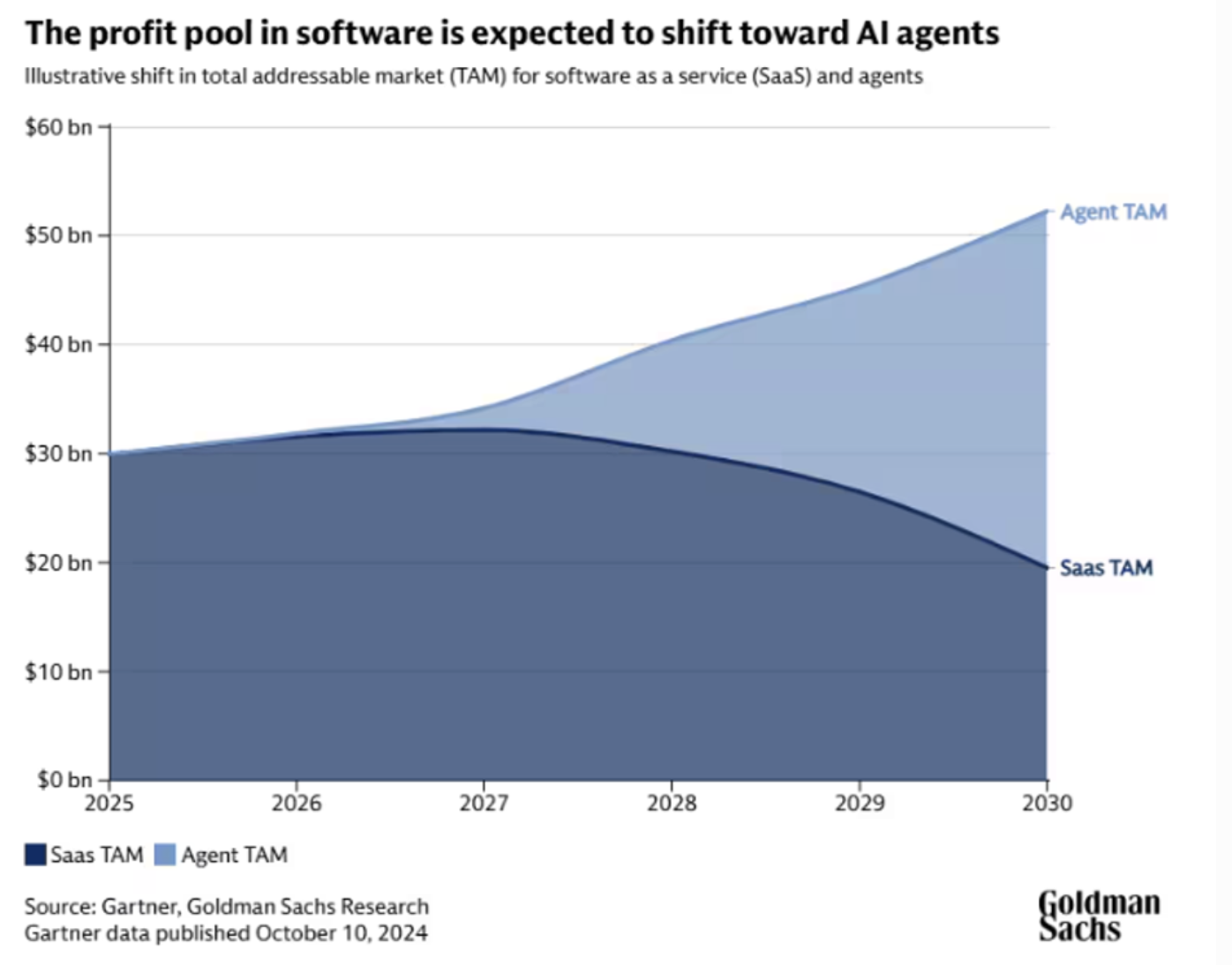
The market is pricing this in. SaaS stocks lost ~$300 billion in market cap reflecting investor fears of AI workflow substitution. While the reaction was sharp, Goldman Sachs estimates the Agentic total addressable market will exceed SaaS by 2030. AI threatens to unbundle software, allowing enterprises to customize functionality less expensively. Forbes Goldman Sachs
Source: Goldman Sachs
“Pain is the new moat,” says OpenAI’s Kiriti Badam. Applied anthropologist Mikkel Rasmussen warns that if work feels easy, he gets “nervous.” The real competitive advantage lies in working through the hard-to-solve problems. YouTube Lenny’s Newsletter
Fast for the few
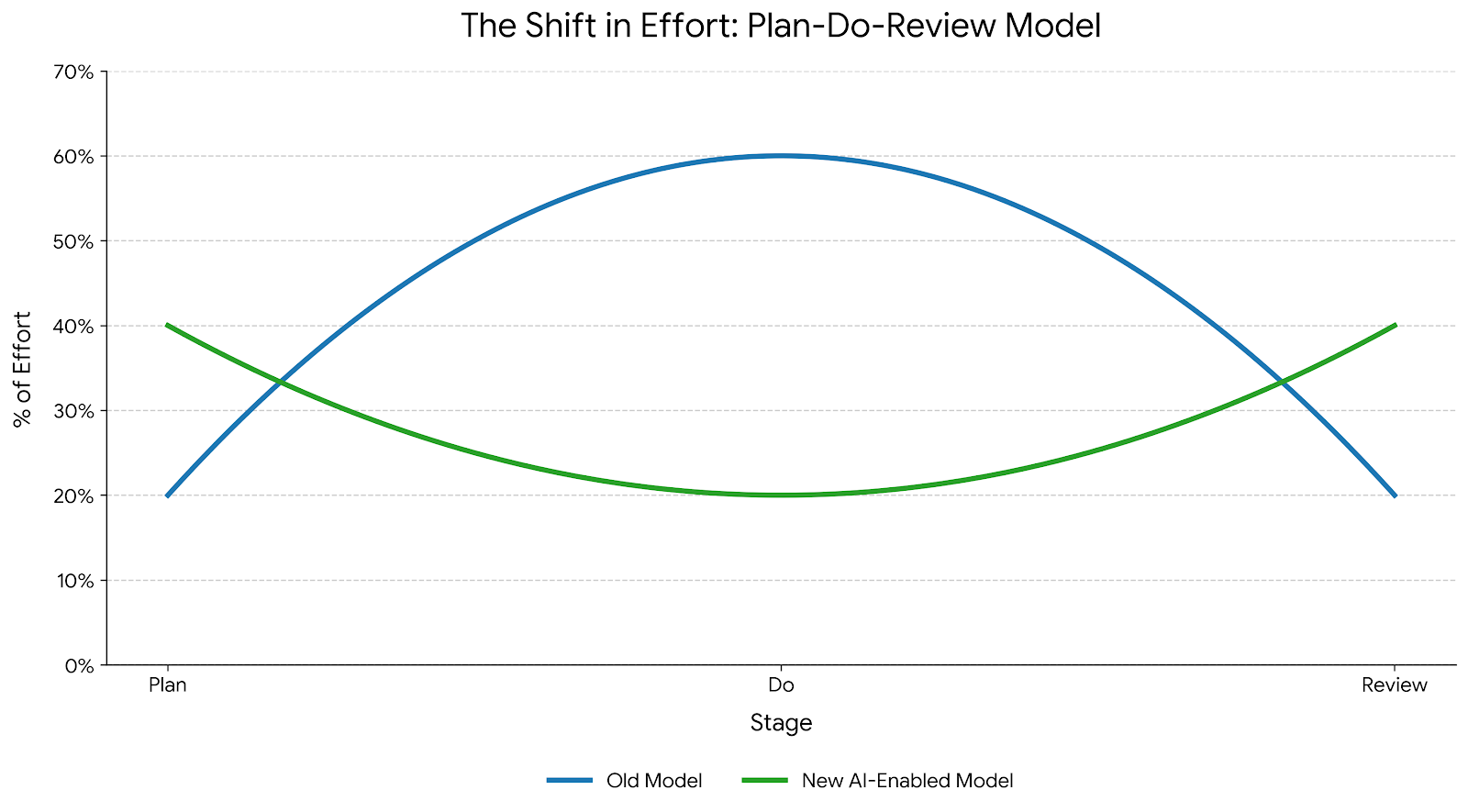
Development is shifting from coding to architecture and review. Anthropic shipped “Claude Cowork” in just 10 days with four engineers using AI to generate 90% of the codebase—then launched it as a desktop tool that gives non-engineers the same power, no terminal required. OpenAI similarly built Sora in 28 days. Product timelines are compressing by orders of magnitude. X Substack Anthropic
Source: Ken Calhoon
“That ship has sailed and good riddance,” said a veteran developer about manual coding in a UC San Diego study. While experts embrace AI agents, the paper reveals they reject “vibe coding,” instead choosing to “control” agents through rigorous planning and supervision to ensure quality. link
Friction for the many
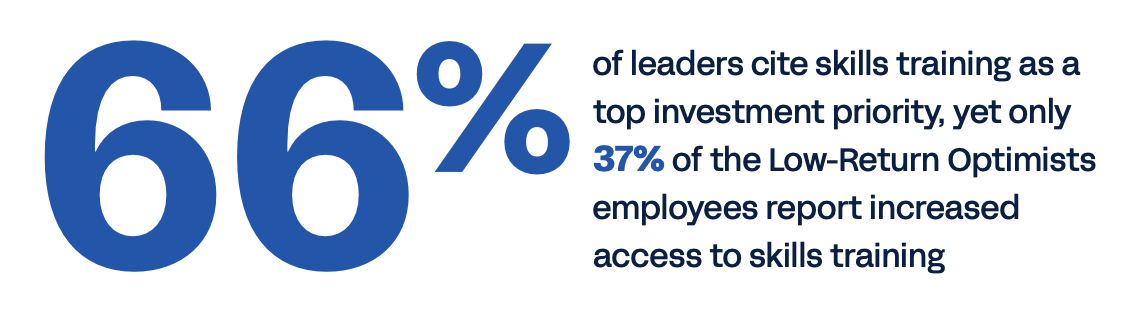
Outside of elite engineering teams, however, general enterprise adoption faces friction. Workday finds AI carries a 37% “rework tax” for correcting low-quality outputs. To reclaim productivity, leaders must guide employees from augmentation to automation—refining prompts, curating reference content, and experimenting with different LLMs to fix instructions rather than results. link
Source: Workday
Microsoft sees this too. According to The Information, the company is reportedly offering large clients tens to hundreds of thousands of dollars to fund employee training and ensure Copilot adoption, concerned that customers aren’t getting enough value from its AI tools. link
Anthropic argues the biggest barriers aren’t model capabilities but data access and context aggregation. Companies with fragmented or siloed data will struggle to unlock sophisticated use cases regardless of technological advancements. link
Security risks compound these adoption challenges. Air Street Press highlights the growing conflict between innovation and safety following OpenClaw’s debut. Cisco deems the tool a “security nightmare,” yet Token Security found 22% of tracked users have installed it on corporate systems. link
The land grab continues
Google says Gmail is “entering the Gemini era,” powered by its Gemini 3 models. New features include an “AI Inbox” to prioritize VIPs and “AI Overviews” that let you ask your inbox questions naturally, turning the email client into a proactive personal assistant. link
OpenAI is expanding on two fronts. It launched ChatGPT Health—a private workspace developed with over 260 physicians that connects with Apple Health and MyFitnessPal—after finding 230 million people already ask its models health questions weekly. And it will test ads in its free and $8/month “Go” tiers to monetize 900M weekly active users, with advertising crucial to fund $1.4 trillion in infrastructure commitments. OpenAI Seeking Alpha Stratechery
The “new front door”
McKinsey warns the “new front door” to the internet is shifting: by 2028, AI could dominate 50% of search activity, influencing $750 billion in commerce. As decision-making moves pre-click, brands relying on traditional SEO risk a 20–50% traffic plunge, necessitating a pivot to AI-native strategies. link
Because AI search is answer-based, brands are scrambling to influence those answers. Ahrefs found the most detailed story wins, even if false. After seeding Reddit and Medium with fake narratives about a made-up brand, they found models like Gemini trusted third-party lies over the official FAQ, making GEO a critical new marketing frontier. link
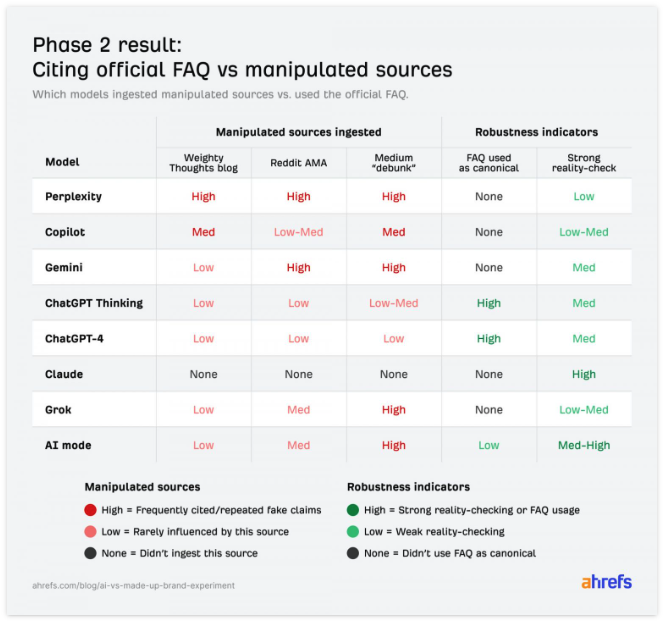
Source: Ahrefs
On the production side, Colgate-Palmolive worked with Google and BCG to produce video ads 4x to 6x faster using AI-generated imagery. BCG estimates fixing content inefficiencies can save marketers 10% to 30% of their total budget. Google BCG