How to Strategically Curate AI Use Cases
We started with 30+ AI use cases. The best 5 made the cut. Here’s how a curated approach sets up better outcomes.
How do you turn a sprawling list of 30+ AI ideas into a focused, high-impact portfolio? I recently helped a client do just that, using a stepwise process to move concepts from thoughtful brainstorms to a clear set of priorities.
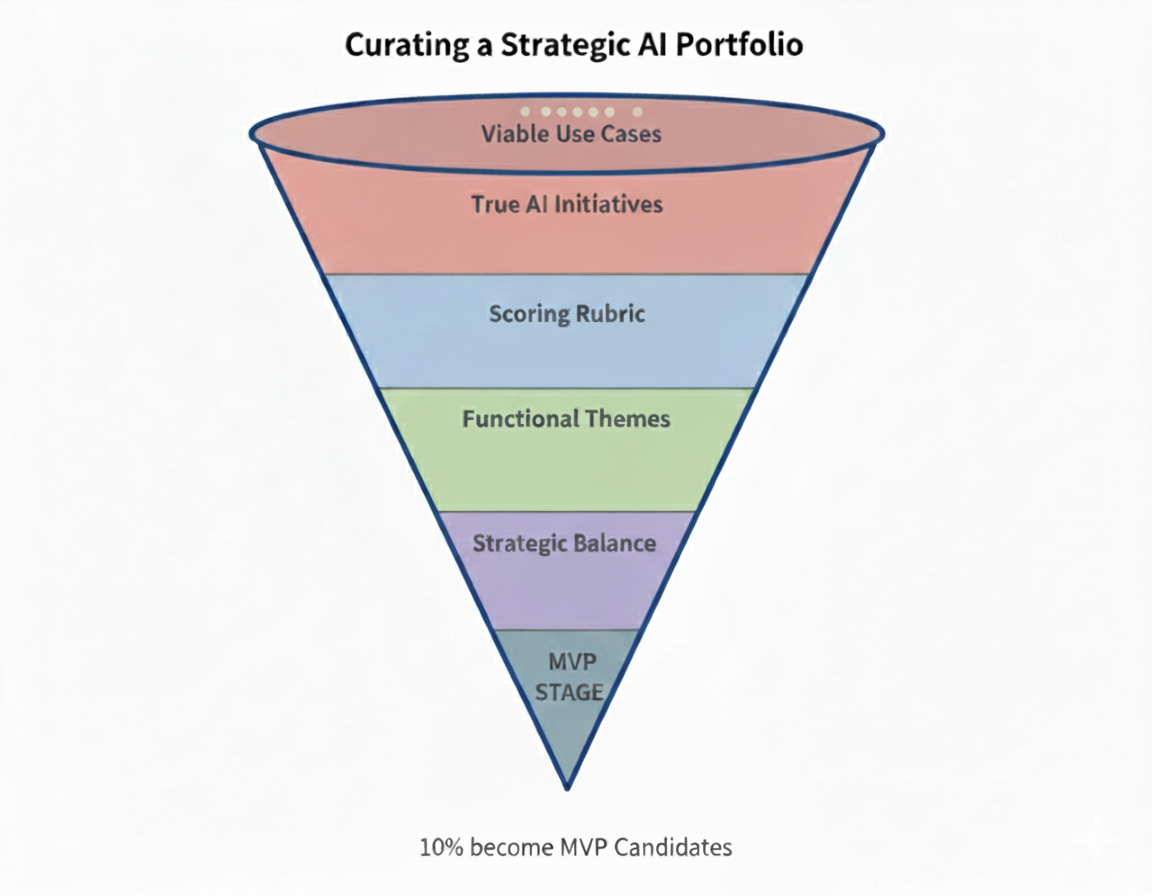
Filters for curating AI use cases
Here’s the methodology we applied:
𝗙𝗶𝗿𝘀𝘁, we ran a simple litmus test: Is this a problem that uniquely requires AI? About a fifth of the list was immediately re-categorized as systems improvements—important, but not for the AI team. That left us with ~25 contenders.
𝗡𝗲𝘅𝘁, we used a scoring rubric to evaluate each one on two axes: business impact (financials, customer satisfaction) and feasibility (cost, complexity). Clear criteria enabled consistent conversations across business units about the ratio of return to investment. Projects with the highest impact-to-investment ratio rose to the top.
𝗧𝗵𝗲𝗻, we looked for patterns, grouping use cases into functional themes like knowledge retrieval or visual rendering. This wasn’t just an organizing exercise; it was strategic. Building a capability in one area creates leverage for the next.
𝗙𝗶𝗻𝗮𝗹𝗹𝘆, we balanced the portfolio. We deliberately selected initiatives from different business units to broaden exposure and build enterprise-wide muscle. We also mixed iterative “quick wins” with a few strategic bets, mirroring the layers in my Enterprise AI Pyramid framework.
𝗧𝗵𝗲 𝗿𝗲𝘀𝘂𝗹𝘁: we curated the list from over 30 down to 5 high-potential projects ready for MVP design.
𝗧𝗵𝗲 𝗹𝗲𝘀𝘀𝗼𝗻: A successful AI strategy isn’t measured by how many projects you start, but by how many impactful projects reach production. Culling down to a strategic few ensures the right initiatives get the focus they need to cross the finish line.
What other criteria have you used in selecting AI use cases?