Workflow Automation 2.0: Marrying Hard-Coded Logic with Adaptive AI
In a recent AI brainstorming workshop with a client, one set of opportunities leapt out: automating complex, multi-step workflows. Nearly three-quarters (72 %) of IT decision-makers say this kind of workflow automation offers the greatest near-term value, according to a recent Bain & Company survey.
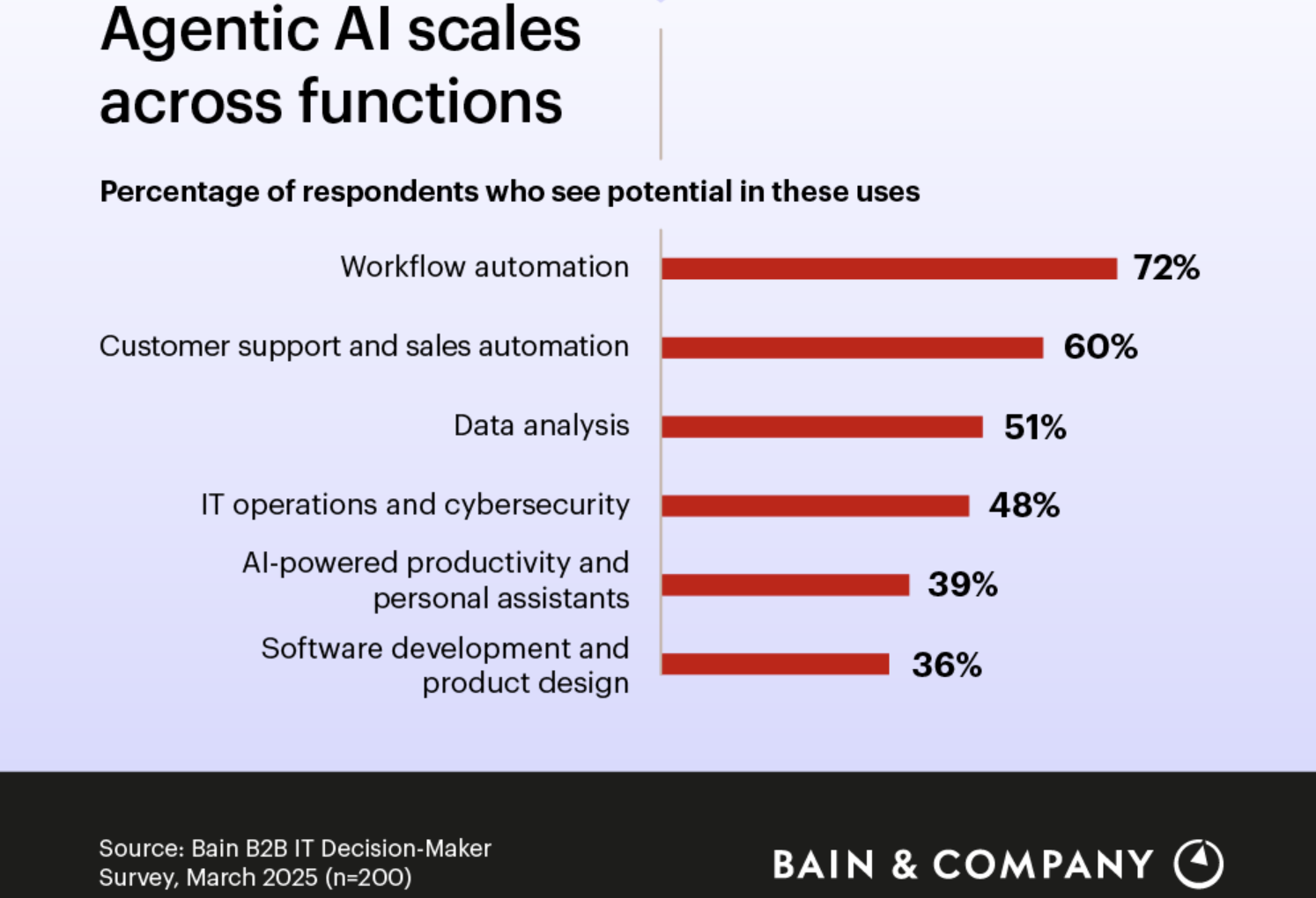
Workflow, customer support, and sales automation top the list
Workflow automation itself isn’t new — think invoice and purchase-order approvals, IT ticket routing or triggered marketing campaigns. Earlier generations were rigid, built around structured data, static rules and a narrow set of actions. Gen-AI agents can now digest unstructured inputs, coordinate teams of bots and surface multiple solution paths, while hard-coded business logic underpins deterministic outcomes.
The cultural upside is just as compelling. Rather than ripping out well-understood processes and replacing them with opaque “black-box” AI, leaders can keep the workflows that already work—and make them far more adaptable and dynamic.