The Hypothesis-Driven Approach to AI Development
“You can’t roadmap what hasn’t yet been discovered,” - @Bryan Bischof. Apple’s recent retrenchment from its ambitious AI strategy is a case in point.
I ,and many others, found “Apple Intelligence” announced in 2024 compelling - leveraging user data while retaining privacy through on-device processing, private cloud computing, and accessing outside models only when necessary with permission.
The problem: Apple set a timeline but couldn’t deliver the core technology. After many delays, the company has retrenched to a more incremental strategy - what Bloomberg called “a relatively meager slate of new AI enhancements.” It’s also clear from Wall Street Journal graphics that Apple is being massively outspent in AI.
Bryan’s point is that AI product development differs from software development. In software, we generally know how something can be done - the questions are about resources and timing. In AI development, on the frontier of feasibility, we often don’t know if something can be built. The process requires forming hypotheses and experimenting to steadily build strong AI capabilities. You also have to invest.
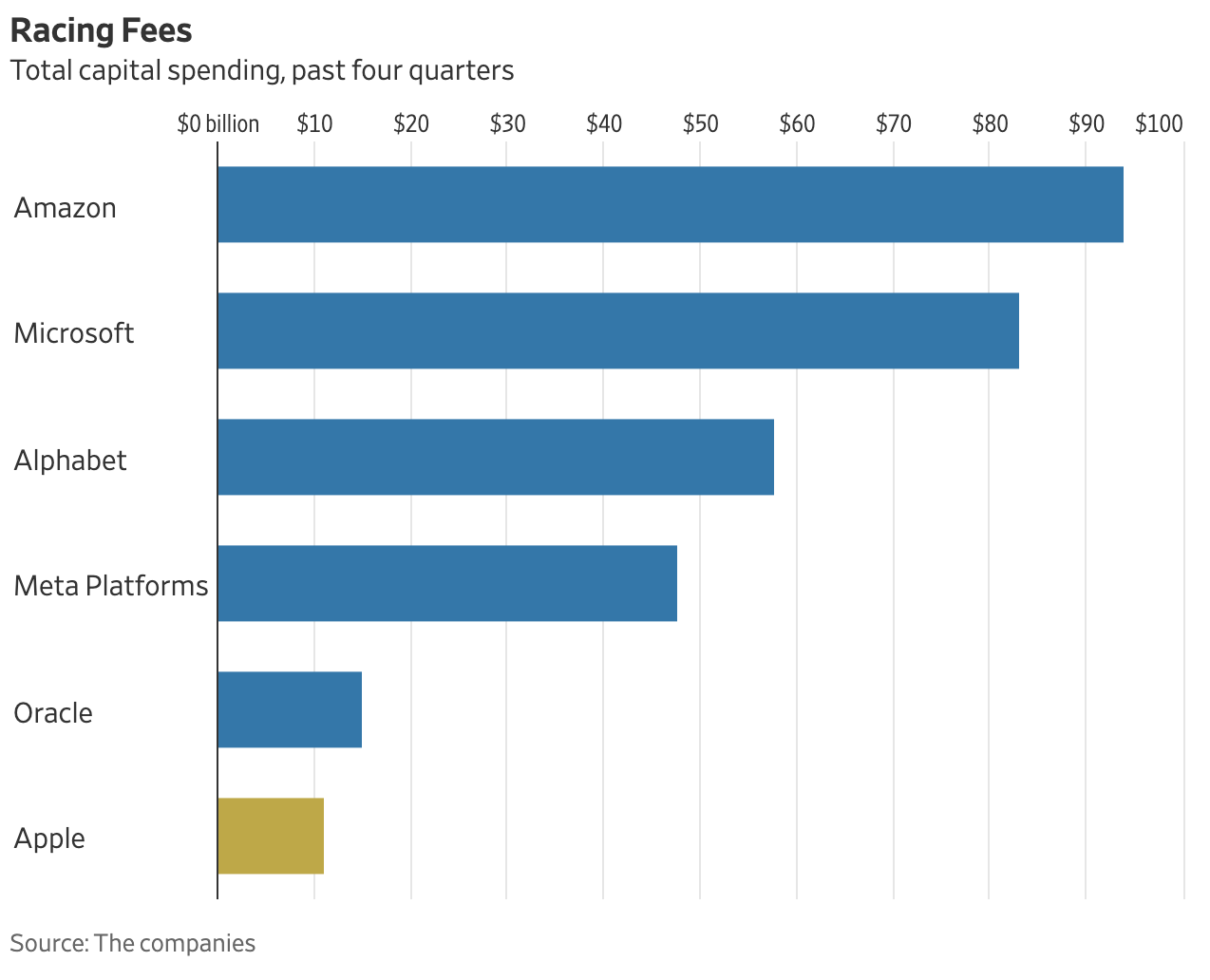
Tech Capital Investment